



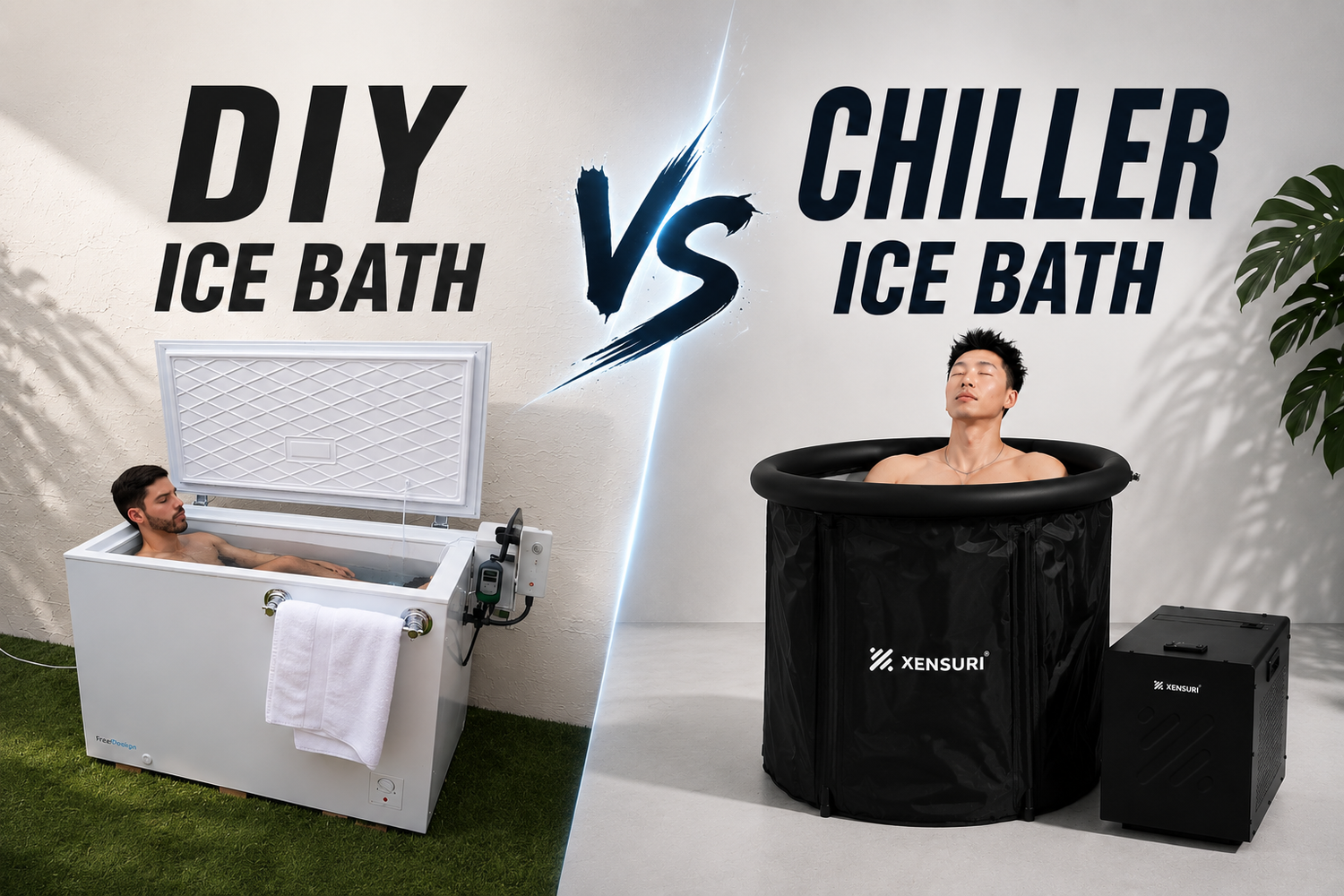
Over the past few years, DIY chest freezer cold plunges have become one of the most popular alternatives to professional cold plunge systems.
At first glance, the appeal makes perfect sense.
A used freezer can cost only a few hundred dollars, and with a few modifications, it seems possible to create a functional cold plunge setup for far less than a dedicated system.
For people who enjoy building things themselves, the DIY route can absolutely work.
But after looking more closely at the long-term experience — including maintenance, usability, safety, and ongoing costs — many users eventually discover that the biggest challenge isn’t getting the system running.
It’s continuing to use it consistently over time.
1. The Upfront Cost Is Only Part of the Picture
Most DIY cold plunge discussions focus heavily on the initial freezer price.
What often gets overlooked is everything that comes afterward.
To create a setup that feels reliable and practical for daily use, many users eventually add:
- Waterproof coatings
- Sealants and insulation materials
- External temperature controllers
- Circulation pumps
- Water treatment solutions
Individually, these upgrades may not seem expensive. But over time, the total investment can grow much larger than expected.
And unlike professional systems, maintenance often becomes part of the daily routine rather than something handled in the background.
2. Water Maintenance Is More Demanding Than Most People Expect
One of the biggest differences between DIY setups and dedicated cold plunge systems is water management.
Without built-in filtration or sanitation, the water can become difficult to maintain over time.
Many DIY users find themselves:
- Draining water frequently
- Cleaning the interior regularly
- Managing odors or buildup
- Monitoring water quality more closely than expected
For some people, this isn’t a major issue.
But for others, the ongoing maintenance slowly becomes the reason the plunge gets used less and less.
3. Chest Freezers Were Never Designed for Human Immersion
This is where the conversation becomes more important than cost alone.
Chest freezers were originally designed to freeze food in dry environments — not to support long-term water immersion with people inside.
That doesn’t automatically make DIY setups unsafe, but it does mean users often rely on additional modifications and precautions to make the system feel comfortable to use.
For example:
- Many users unplug the freezer before entering the water
- Extra waterproofing is commonly added
- Electrical protection systems become essential
Professional cold plunge systems are specifically engineered around water circulation, insulation, and electrical separation from the beginning.
That difference in design philosophy matters more over the long term than most people initially expect.
4. The Daily Experience Is What Usually Changes People’s Minds
The biggest challenge with DIY cold plunges usually isn’t whether they work.
Many of them do.
The real question is whether the experience stays convenient enough to become part of everyday life.
Cooling Can Be Slow or Inconsistent
Depending on the setup, water temperature may fluctuate more than expected.
Some users also notice:
- Uneven cooling
- Temperature layering
- Long cooldown times
- Difficulty maintaining stable temperatures during warmer months
For occasional use, this may not matter much.
But for people trying to build a consistent recovery routine, convenience becomes increasingly important.
Maintenance Fatigue Builds Quietly
One of the most common patterns among long-term DIY users is simple:
The system gradually becomes harder to maintain consistently.
A small leak turns into a weekend repair. Water changes take longer than expected. Cleaning gets postponed.
Over time, the issue often stops being performance.
It becomes friction.
And when a recovery habit starts feeling inconvenient, people naturally use it less.
That’s why many DIY setups eventually end up unused — not because they completely failed, but because they became difficult to integrate into daily life.
5. What Professional Cold Plunge Systems Actually Offer
A lot of people assume professional systems are simply selling “colder water.”
But the biggest difference is usually long-term usability.
Professional systems are designed to reduce friction:
- Faster and more stable cooling
- Integrated filtration and sanitation
- Better insulation
- Safer electrical separation
- Automated temperature control
- Lower day-to-day maintenance
In other words, the value isn’t just the cooling itself.
It’s the consistency and simplicity that make regular use easier.
And for most people, consistency is what ultimately determines whether cold plunging becomes a lasting habit.
6. Conclusion
DIY chest freezer cold plunges can absolutely work, especially for people who enjoy hands-on projects and don’t mind regular maintenance.
For some users, they’re a great way to explore cold exposure without making a large upfront investment.
But for long-term daily use, many people eventually realize that the real challenge isn’t building the system.
It’s maintaining the experience.
In the end, the most important factor usually isn’t the lowest upfront price.
It’s whether the setup is simple, reliable, and convenient enough that you’ll still want to use it consistently six months or even years later.

Leave a comment
All comments are moderated before being published.
This site is protected by hCaptcha and the hCaptcha Privacy Policy and Terms of Service apply.